

Most people don’t think about home maintenance until something breaks.
The water heater stops working.
The gutters overflow.
The HVAC system makes a strange noise.
You discover a small leak that has been slowly getting worse.
The problem isn’t that homeowners don’t care. It’s that homes come with hundreds of small responsibilities, and nobody gives you a manual for managing them.
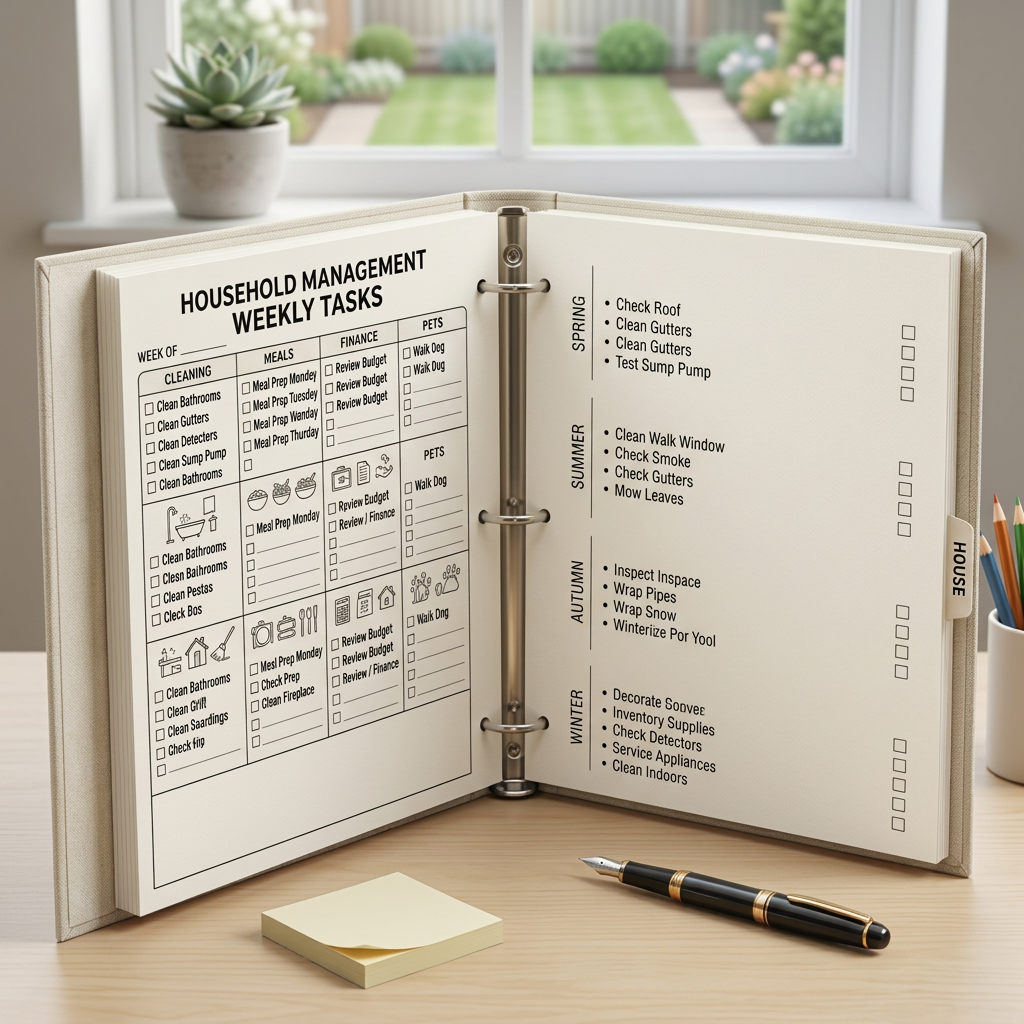
A simple annual home maintenance calendar turns those random tasks into a predictable system.
Instead of reacting to problems, you create a routine that protects your home, saves money, and reduces stress.
Why an annual maintenance calendar matters
A home is one of the biggest investments most people make, but many people don’t have a system for caring for it.
Without a plan:
- Small problems become expensive repairs
- Important tasks get forgotten
- Warranties and service records become difficult to find
- Seasonal jobs pile up
- Maintenance becomes overwhelming
A calendar gives every task a place.
You don’t need to spend every weekend working on your house. You just need a reliable system. You know those Calendar checkmarks they have on “Septic Bacteria” jars that you need to flush down your toilet if you live in a house with a septic (ask me how I know). I was skeptical with that at year 1. “I won’t forget such an easy thing to do once a month!” – was my initial thought, and a year and “somehow 5 extra” pods in a jar later I completely mark that little calendar every month.
January: Review and Plan
The start of the year is a good time to review your home.
Tasks:
☐ Review last year’s maintenance records
☐ Check warranties and service dates
☐ Create a list of upcoming repairs
☐ Review emergency supplies
☐ Replace batteries in smoke and carbon monoxide detectors
☐ Check fire extinguishers
Also consider:
Create a simple home information file containing:
- Appliance manuals
- Warranty information
- Contractor contacts
- Paint colors
- Model numbers
- Repair history
Future you will be grateful, trust me. I totally believe that, “yes, we can find all the manuals online nowadays”, but when we were trying to replace a broken ice container in our fridge, there was no way to determine which model exactly do we have, as they all just a tiny bit different, and boom, don’t fir your fridge, and also non-returnable. Don’t ask me how I know.
February: Indoor Systems Check
Winter is a good time to focus indoors.
Tasks:
☐ Check plumbing for leaks
☐ Inspect under sinks
☐ Clean dryer vent
☐ Check faucets and toilets
☐ Replace HVAC filters
☐ Check for drafts around windows and doors
A small leak can create major damage if ignored.
March: Prepare for Spring
Spring is when many outdoor maintenance tasks begin.
Tasks:
☐ Inspect roof after winter weather
☐ Clean gutters
☐ Check downspouts
☐ Inspect exterior paint and siding
☐ Test outdoor faucets
☐ Check drainage around the home
Water management is one of the most important parts of home maintenance.
April: Outdoor Reset
As weather improves, take care of outdoor areas.
Tasks:
☐ Clean patio and outdoor furniture
☐ Inspect fences and gates
☐ Check deck condition
☐ Prepare garden areas
☐ Inspect irrigation systems
☐ Remove debris around the home
This is also a good time to identify repairs before they become urgent.
May: Safety and Comfort
Before summer arrives:
Tasks:
☐ Service air conditioning (if applicable)
☐ Clean ceiling fans
☐ Check window screens
☐ Review emergency plans
☐ Inspect outdoor lighting
Small preventative tasks can improve comfort all summer.
June: Mid-Year Home Review
Halfway through the year is a good checkpoint.
Ask:
- What repairs have been postponed?
- Are there recurring problems?
- Are there upgrades worth planning?
Tasks:
☐ Review maintenance budget
☐ Update home inventory
☐ Organize receipts
☐ Check appliances
July: Appliances and Efficiency
Summer is a good time to review energy use.
Tasks:
☐ Clean refrigerator coils
☐ Check freezer temperature
☐ Clean range hood filters
☐ Inspect washing machine hoses
☐ Review energy costs
August: Prepare for Fall
Fall preparation prevents winter problems.
Tasks:
☐ Clean gutters again
☐ Inspect heating system
☐ Check insulation
☐ Seal gaps and cracks
☐ Prepare outdoor equipment for storage
September: Heating and Weather Preparation
Before colder weather arrives:
Tasks:
☐ Service heating system
☐ Replace HVAC filters
☐ Test thermostat
☐ Check smoke detectors
☐ Inspect chimney or fireplace
October: Winter Preparation
This is the month for prevention.
Tasks:
☐ Clean leaves and debris
☐ Protect outdoor pipes
☐ Drain outdoor hoses
☐ Check roof and gutters
☐ Prepare winter supplies
November: Document and Organize
End-of-year organization makes next year easier.
Tasks:
☐ Update home inventory
☐ File receipts
☐ Review insurance documents
☐ Photograph valuable items
☐ Plan next year’s projects
December: Review and Reset
Before the year ends:
☐ Review what worked
☐ List unfinished projects
☐ Create next year’s maintenance budget
☐ Update your home records
A few minutes of planning now can prevent many headaches later.
The easiest way to maintain this system
The goal is not to create another complicated household task list.
The goal is to create a simple rhythm:
Monthly:
Check your calendar and complete the scheduled tasks.
Quarterly:
Review your home systems.
Yearly:
Update your records and plan ahead.
A well-maintained home doesn’t happen by accident. It happens because someone created a system.
It is so incredibly helpful to have a printed (or if you are a “very digital” person Notability, etc. e-version in your planner) copy of a checklist calendar at your reach. I have my favorite free Maintenance Checklist calendar for you to download right here.